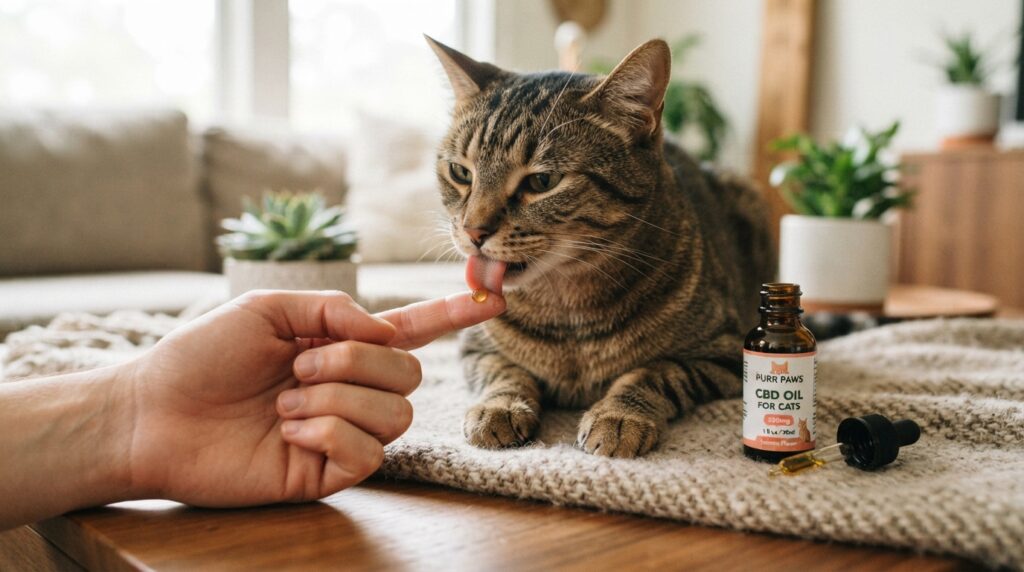
A cat that stops grooming or skips breakfast sends owners searching fast, and plenty of those searches end at a bottle of hemp oil. Before anything goes into a cat’s mouth, safety deserves the first look.
So, is CBD oil for cats safe? The evidence is incomplete. Early studies report that many healthy cats tolerate it, yet long-term data are missing and product quality is uneven.
Below is a plain-language breakdown of the known risks, the cats who should wait, and a step-by-step way to lower the odds of trouble.
What the Safety Record Looks Like
No Approval, No Official Safe Dose
No CBD product is FDA-approved for cats, which means no agency has set a standard dose or reviewed a label for feline use. The only approved CBD medicine is Epidiolex, a human prescription for specific seizure disorders, approved in June 2018.
Its prescribing information lists liver injury, drowsiness, and decreased appetite among human side effects. Those findings do not transfer directly to cats, but they show why monitoring matters.
Side Effects Reported So Far
Veterinary papers and owner reports describe a short list of mild signs:
- Drooling or lip licking right after a dose
- Vomiting or loose stool
- Extra sleepiness
- Lower interest in food
Most reports describe signs that pass quickly. Still, small studies and owner surveys cannot capture rare events, and a cat that hides illness (a standard feline habit) may show little until a problem is well along.
The Liver Question
In a 2018 Cornell University study of dogs with osteoarthritis, published in Frontiers in Veterinary Science, researchers saw alkaline phosphatase rise in some dogs on CBD oil. No equivalent finding is established for cats because the studies are so small.
That gap is the reason many veterinarians request bloodwork before starting and again a few weeks later. A baseline number turns a vague worry into something measurable.
THC Is the Bigger Hazard
CBD itself has not been linked to dramatic poisonings in cats. THC has. Cats exposed to it can show dilated pupils, stumbling, dribbling urine, a slow heart rate, and vomiting.
Contamination is the sticking point. A 2017 JAMA study of 84 CBD products sold online found THC in about 21 percent of them, and the products tested were meant for people. A cat’s small body leaves very little margin for trace amounts.
Who Should Wait
Kittens and Nursing Cats
No safety data exist for kittens, pregnant queens, or nursing mothers. Developing bodies process compounds differently, and the cost of being wrong is high.
A vet can usually suggest better-studied options for common kitten complaints such as stress during a move or fussy eating.
Cats with Liver or Kidney Disease
The liver is the main route for clearing cannabinoids. A cat with liver trouble may clear them slowly, and one with kidney disease is already coping with a delicate balance of fluids and waste.
This is a vet-only decision. Starting a supplement on a cat with a chronic illness without testing is a gamble.
Cats on Other Medications
Anti-seizure drugs such as phenobarbital and many pain medications are processed by the liver. CBD uses overlapping pathways, so a vet needs the full list of everything the cat takes, including supplements and flea products.
A Safer Way to Approach It
Five Steps Before the First Drop
- Book an exam and mention the interest in CBD at the start of the visit.
- Ask for baseline bloodwork, particularly liver values.
- Choose a product with a batch-specific lab report showing THC results.
- Begin at the amount the vet suggests and hold it steady for several days.
- Record appetite, energy, litter box use, and any unusual behavior daily.
Skipping step one is the most common mistake.
When to Call for Help Right Away
Seizures, collapse, trouble breathing, repeated vomiting, or a cat that cannot stand all call for emergency care. The ASPCA Animal Poison Control Center runs a hotline at (888) 426-4435, and a consultation fee may apply.
Bring the bottle. The label and batch number let a clinician work faster.
Final Thoughts
Safety for CBD oil for cats depends on product quality, the individual animal, and supervision. THC contamination, liver strain, and drug interactions are the three issues most worth checking. Cats with existing illness, kittens, and nursing mothers should wait for vet advice. Slow, documented steps beat guesswork.